Google Ads

Google Ads are very helpful for businesses to help reach their demographics further ensuring their sales. This blog will provide tips, tricks, and the information needed to help your Google Ads succeed.

Image result for google
https://www.google.com/search?q=google&source=lnms&tbm=isch&sa=X&ved=0ahUKEwjxs_DHte3jAhVgHTQIHUw2Bz4Q_AUIFCgE&biw=1368&bih=770&dpr=2#imgrc=YOkILyBe772mJM:

Learn the basics of Google Ads

Google Ads help connect businesses with potential customers. Allowing you to reach multiple customers through Google searches, YouTube channels, and other news sites. You can control your budget, where the ad appears, and the demographic who sees it. Just ensure the ads are clear, relevant, and include the link to your site (Academy for Ads, 2016). This is important, as without the link the customer will not be able to find their way to your website.

Google ads allow you to:

•    Connect with customers

•    Work within your budget

•    Improve your overall performance

Choose where customers see your ads:

Google ads have multiple options many that can be added in to allow customers to find businesses on Google Search. You can add text, clickable links, and videos that pop up before YouTube Videos (Academy for Ads, 2016, para. 4). There are two different platforms your ads can appear on, which is either network or display ( Academy for Ads, 2016, para.6). Google Ads can appear on Google sites, partner sites, and mobile phones.

On the search Network your ad appears on:

•    Google search, shopping, maps, and play

•    Sites that are connected with google

While Display:

•    They are on Google sites

•    Always partners across the web

You can choose your Ad formats. This is important because your format is what will be attracting your customers to your business. The most popular ad formats are:

•    Text ads

o    This includes a headline description, URL, and call to action

•    Add extensions

o    More information such as a phone number

•    Shopping ad

o    Includes images and pricing

Create effect text ads

For text in the ads; the ideal look is clear headline, descriptive text, and a call to action. Those the text on ads may seem simple, it is quite powerful; as it allows a business to attract the right customer. Text ad only has three parts to them:

o    Headline

o    URL

o    Path field (optional display this is apart of the URL)

o    Description

Text ads need to be specific, actionable, and relevant (Academy for Ads, 2016, para. 6). Here are some tricks to help write to them:

o    Show your customer your uniqueness when compared to the competition

o    Add a call to action

o    Have sales terminology

o    Include keywords that may be searched

o    Ensure your ad matches your landing page

Overall you want to ensure your ads are compelling to your customers and allow them to access your products easily. This is one of the types of marketing strategies that I have used in the past, and it has proven to be successful multiple times.

Enhance your ad with extension

Ad extension allows you to have the ability to call a business straight from the ad. In addition to the call feature it also has:

o    Location

o    Information

o    Links

o    Text

By adding the ad extension option, you increase your value of the campaign no additional charges. You only pay when someone calls or downloads the app from the ad (Academy for ads, 2016, para.6). Your ad extension will not always show up, as google tracks an individual response within their search (Academy for ads, 2016, para.9). Though there are multiple different options for ad extensions, always choose the best fit for your company and their goals!

Choosing the best campaign is very important, as you want to ensure you will have the right demographic checking out your business. The first step in Google Ads is making the campaign (Academy for ads, 2016, para.5). The most common campaigns are:

o    Search

o    Display

o    Search with display opt-in (Academy for ads, 2016, para.11)

o    Video

o    Shopping

o    Universal

Depending on the campaign you select, it will determine where the customer will see them. Therefore it is always a good idea to further tailor your ad. The settings you can adjust on your campaigns include:

o    The name and type of campaign

o    Network, where the ad will appear

o    Types of devices

o    Budget and bidding

o    Extension

o    Extra settings

Organize your account

Keeping your Google Ads organized is very important. It helps you keep track of their progress and if any need adjusting. You can organize your ads by “product or theme” (Academy for ads, 2016, para. 5). However to organize your ad you must know the layer of organization with Google Ads (Academy for ads, 2016, para.5). These include:

o    Account

o    campaign

o    Ad group

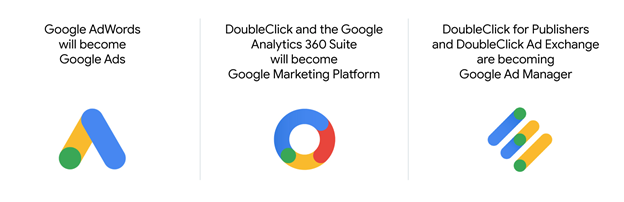
A good tool to help you keep your Ads organized is Google Ad manager (Academy for ads, 2016, para.7). This function allows you to manage all your accounts from a single location. This is only one tip to keep your ads organized some others include:

o    Have separate campaigns for products, promotion, and regions

o    Have a separate group that include keywords and bids for every product or service (Academy for ads, 2016, para.9)

These will help you keep track of your ads and ensure your customers can find the products they desire!

Image result for organizing
https://www.google.com/search?q=organizing&source=lnms&tbm=isch&sa=X&ved=0ahUKEwiVi9GEt-3jAhVFGDQIHUCPD-oQ_AUIESgB&biw=1368&bih=770#imgrc=flXgAhUgKSujXM:

Reach Customers with target

Before developing strategies to obtain your target market, you should think about how finding your customer online. Three ways include:

o    Who (Demographic)

o    Where (their location)

o    What (their interest)

In my experience, I have seen companies utilize these three components and reach their target market multiple times. Without reviewing this first, you may miss your target market altogether.

Help customers find you

The most important way for a customer to find you is through keywords. When these words are typed into a search it an help your ad appear for multiple customers. Through developing a list of keywords, you will be able to connect with the most interested customers (Academy for ads, 2016, para.6). Some tips for having the correct keywords include:

o    Remember your branded terms

o    Connect it them to your website

o    Words related to your products

When creating your list:

o    “Think like the customer” (Academy for ads, 2016, para.9). Think of categories and specific words the customer may use to find products.

o     Always organize them by theme, especially if there are different types of products or services (Academy for ads, 2016, para.9).

o    Be very specific (Academy for ads, 2016, para.9)

o    Use negative keywords (You don’t want to pay for clicks that will not bring in a sale) (Academy for ads, 2016, para.9)

o    For each group have between 5-20 words

These tips will ensure your ads are seen by the correct target market!

Control which searches trigger your adds

To ensure the correct customers see your ads, you can use match types to help control your keywords (Academy for ads, 2016, para.4). This ensures that your target market is viewing your ads rather than a wide spectrum of people. There are different match types some include

o    Board match

o    The default setting

o    Broad match modifier

o    Add a (+) before keywords (Academy for ads, 2016, para.7)

o    Phrase match

o    Add “” around keywords (Academy for ads, 2016, para.7)

o    Exact match

o    Add [] around keywords (Academy for ads, 2016, para.7)

o    Negative match

o    Add – before keywords (Academy for ads, 2016, para.7)

All of these settings will help ensure that your target market will see your ads. This will not only save you money but also time as you can focus more on the correct customers.

Make your ads seen:

Several factors impact your ad. This includes, “your bid, the impact of ad formats, your ad’s expect clickthrough rate, relevancy, and your landing” (Academy for ads, 2016, para.3). Google Ad auction considers these factors when deciding where to place your ad (Academy for ads, 2016, para.3). It decides where the ad will appear, the order the show, and how much the advertiser will pay (Academy for ads, 2016, para.4). These are important factors, as you want to ensure your ads are seen by your target market.

In addition to this, you also want to make sure your ad is of high quality. As the higher the score, the more relevancy your ad and landing page are. Therefore the system will think that it is useful for a customer looking at the ad (Academy for ads, 2016, para.8). Along with this, the higher your ad is ranked, the better the location it will receive.  Overall the rank is very important because it determines your spot on the page. In my experience, this can be crucial as you want to ensure your target market can see your ad.

Match Media cost model with your budget

When determining your costs, you should choose the one that best fits your campaign goals. Ad serving does cost money, however depending on your business will depend on the model you decide to choose. Costs per interaction will vary with the model being used. Therefore, it may be hard to choose the best one for you. When deciding, keep in mind what you want the customer to do afterward (Academy for ads, 2016, para.7).

Determining the Bidding Strategy

Placing a bid, it puts you in the auction, the auction chooses which ads and where to place them. You can manage your bid through manual bidding or automated bidding. Manual bidding is when you control the bidding, while automated is when Google controls it for you. Depending on your business you will choose which one is the better option for you. Choose a budget the best fits your keywords, profit, and campaigns (Academy for ads, 2016, para.15).

Cost-per-click (CPC) bidding is where most people start. The most important thing to remember is to know how much the ad is worth to your company. Here are some tools to help you with CPC bids:

o    Run bid simulator

o    Plan keywords

o    The first-page bid estimates how much you need to pay

These will help you evaluate the amount you want to bid. Always keep in mind the return on your investment. As you do not want to pay a large amount and not get your investment back.

Select your Bidding strategy

Automated bidding allows Google Ads to automatically increase your bid based on predictions that will help it become more successful. This technique is not for everyone the tips below will help determine if this is the correct strategy for you. As these are based on automated bidding:

•    Performance goals of the campaign

•    Does your campaign meet Google performance recommendation (Academy for ads, 2016, para.8)?

•    Have you enabled your conversion tracking?

If this does not sound like the best fit, you can always use manual bidding. There are several options for automated bidding, which include:

•    Enhance cost per click (ECPC)

•    Maximize conversions

•    Target CPA

Overall do your research and find out which method is the best fit for you and your company.

Adjust bids to favor performers

When you are developing your campaigns, you want to make sure you think as the users do. Thinking about what there doing, where they are, their device, maybe the time of day (Academy for ads, 2016, para. 5). Therefore, Bid adjustments allow you to raise and lower your amount depending on the factors. Overall this allows you to bid different amounts ensuring your customer can see you. The bid adjustments available include:

•    Devices

•    Location

•    Time

•    Content

•    Interactions

These options allow you to adjust your bids so you can reach your goals with your campaign. I have seen this done before on Google. Depending on the time of day and my location, my search results may show different ads and companies. 

Align your budget with your goals

Setting your daily budget is a good place to start as you need to recognize how much you willing to spend every day. Ince your budget is reached for that day, your ad stops showing (Academy for ads, 2016, para.6). Some tips for determining your budget include:

•    Determine your monthly budget

•    Calculate based off cost-per-click

•    Know your campaign recommend budget

•    Check ad delivery

I recommend starting low, then as you begin to see results increase your budget. As you do not want to invest too much money and not see your return on investment.

Evaluate Campaign performance

You can measure the results of your campaign by:

•    Analyzing your account

•    Campaign overall

•    Ad group

•    Reports and metrics

By looking at the statistics you will be able to see if your ad is in good standings. There are multiple reports to help you measure your performance (Academy for ads, 2016, para.7).  You want to use the metrics to help you drive and improve your performance. As well, you ant to ensure you calculate your return on investment concerning your ad. As you want to ensure the performance of the ad is not impacting the money you have invested.

Avoid Editorial Errors

Google wants the ads to be clear and consistent, therefore they have quality standards to ensure ads are relevant and correct. If your ad is not up to quality to Google will not allow customers to view it. Spelling, grammar, and style the biggest reasons Google denies ads (Academy for ads, 2016, para.7-8). Therefore, always ensure someone looks it over and spots any errors.

Address Trademark Disapprovals

Your ad will need to be approved by Google, there is three status it could be awarded:

•    Approved

•    Approved (limited)

•    Disapproved

If your ad was disapproved, try to remove the trademark. Most times this is the issue, and once it is re-reviewed it will go live unless there are other troubles with it (Academy for ads, 2016, para.7). However, you can also request trademark authorization from the owner. You can also see if you can use the as without authorization because of the reseller and information policy. However, you must meet the requirements. Overall Google wants to ensure the content the post is relevant to customers.

Conclusion

One example of a company that uses Google Ads is Expedia. The site is usually among the top five websites when I type in anything related to travelling. As well they have an option that allows you to talk to an agent whenever you are looking. Expedia Ads have even popped up on Google partner websites, enhancing the customer to look at different trip options.

Image result for expedia
https://www.google.com/search?q=expedia&source=lnms&tbm=isch&sa=X&ved=0ahUKEwj_uaT4t-3jAhWJoJ4KHfGDCoIQ_AUIFCgE&biw=1368&bih=770#imgrc=L1y0IOTXDiFwiM:

Google Ads can allow your target market access to your ads. However, you do have to place bids and ensure they are in your budget. You do want to ensure that your ads are clear and consistent; otherwise they will not be shown. Before I reviewed the course, I wanted to test my knowledge of Google Ads. The first test I had taken was 50%, however, after taking the course I was able to improve my score to 80%. Hopefully, this blog helps you with your Google Ads!

Until my next post!

References:

Academy for ads. (2016). Adjust bids to favor performers. Retrieved from https://academy.exceedlms.com/student/path/3132/activity/3472

Academy for ads. (2016). Address trademark disapproval. Retrieved from https://academy.exceedlms.com/student/path/3132/activity/3472

Academy for ads. (2016). Align your budget with your goals. Retrieved from https://academy.exceedlms.com/student/path/3132/activity/3472\

Academy for ads. (2016). Avoid editorial errors. Retrieved from https://academy.exceedlms.com/student/path/3132/activity/3472

Academy for ads. (2016). Choose where customers see your ads. Retrieved from https://academy.exceedlms.com/student/path/3132/activity/3472

Academy for ads. (2016). Choose the best campaign. Retrieved from https://academy.exceedlms.com/student/path/3132/activity/3472

Academy for ads.  (2016). Create effective text ads. Retrieved from https://academy.exceedlms.com/student/path/3132/activity/3472

Academy for ads. (2016). Control which searches trigger for success. Retrieved from https://academy.exceedlms.com/student/path/3132/activity/3472

Academy for ads. (2016). Determine a good bidding strategy. Retrieved from https://academy.exceedlms.com/student/path/3132/activity/3472

Academy for ads. (2016). Learn the basics of Google Ads. Retrieved from https://academy.exceedlms.com/student/path/3132/activity/3472

Academy for ads. (2016) Enhance your ads with extensions. Retrieved from https://academy.exceedlms.com/student/path/3132/activity/3472

Academy for ads. (2016). Evaluate campaign performance. Retrieved from https://academy.exceedlms.com/student/path/3132/activity/3472

Academy for ads. (2016). Learn the basic of Google ads. Retrieved from https://academy.exceedlms.com/student/path/3132/activity/3472

Academy for ads. (2016). Help customers find you. Retrieved from https://academy.exceedlms.com/student/path/3132/activity/3472

Academy for ads. (2016). Make you ads seen. Retrieved from https://academy.exceedlms.com/student/path/3132/activity/3472

Academy for ads. (2016). Match media costs models with your budget. Retrieved from https://academy.exceedlms.com/student/path/3132/activity/3472

Academy for ads. (2016). Reach customers find you. Retrieved from https://academy.exceedlms.com/student/path/3132/activity/3472

Academy for ads. (2016). Organize your account for success. Retrieved from https://academy.exceedlms.com/student/path/3132/activity/3472

Academy for ads. (2016). Select your bid strategy. Retrieved from https://academy.exceedlms.com/student/path/3132/activity/3472


LinkedIn Profile For Social Media Success

LinkedIn allows employees and employers to connect, building new futures together. Multiple businesses use LinkedIn as a means of recruiting new employees; therefore, your profile should always be updated with your current information. However, most people struggle to edit their profile in ways that will stand out to future employers. Therefore, today we will go through steps of improving your LinkedIn profile!

Getting Started with the Essentials

The biggest mistake people make on LinkedIn is that they use it as “a billboard rather than as a tool” (Verdonck, 2017). Most people download the social media site, answer the basic questions, and accept some invitations leaving it at that. However, more should be included, as you are making an impression of yourself before a meeting takes place. This is the main reason why the return on investment with social media is important (Verdonck, 2017).  

I have googled myself multiple times, to see what employers will find. This is always a good first step because if employers can not find you at all, they will likely look elsewhere. Therefore, you should consider updating your presence, connectivity, presence, and creditability. Participate in groups, like, comment, post status to show you are informed (Verdonck, 2017). Credibility can be shown by posting long articles this raises your brand. Trust is the last step and can be done through thought leadership (Verdonck, 2017). This will make your profile stand out to professionals, increasing the likeliness that they will want to conduct business with you.

https://www.google.com/search?q=linkedin&source=lnms&tbm=isch&sa=X&ved=0ahUKEwjS7re9taTjAhXphFQKHVo9DcoQ_AUIESgC&biw=663&bih=749&dpr=2#imgrc=OkEXDa0WRe7EtM:

Being found on social media is the first place to start. If you are not found you will not get the opportunity. Therefore, you need to asses these questions:

  • Are you being found by people using the correct spelling of your name? (Verdonck, 2017)
  •  How often is your name misspelled?

You can increase the chance of someone finding you, even if they spell your name wrong. People searching on LinkedIn can start typing before a name appear. If your name is misspelled often, it is smart to add a paragraph on your LinkedIn with different versions of your name. Therefore, you will still be found in the search. Verdonck has his alternative names in older experiences, as people do not look this far, but will still be able to find him on Google and Bing (Verdonck, 2017). It is also a good idea to add abbreviations and nicknames on your profile.

“Every word on your profile matter” (Verdonck, 2017). These terms help employers find you, therefore you should know what you should add to your profile to help you be found, start with your name and the variations (Verdonck, 2017).

Profile Pictures

Profile pictures are a must-have on LinkedIn, it was shown that 90% of users only visit profiles with pictures (Verdonck, 2017). Your picture should be professional, with limited personality as it can be added in other places. Therefore, your picture should be,

  • Professional, with no drinks
  • No holiday pictures
  •  It should only be you in the picture
  •  If the picture can not be cropped well, use a different picture
  •  Headshot is the best, not sitting at your desk, showing your feet or full body
  •  Smile and look relaxed as this should look inviting
  • Have some light and look straight into the camera
  •  Up-date the picture so people feel connected to you
  •  Some branded pictures are acceptable

Along with your profile picture, there is also the brand picture to consider. For the picture, you can “reinforce a personal brand, but also your corporate brand” (Verdonck, 2017), as it helps assure people they are on the correct profile. However, do not overdo this picture, as it is just for support. To add the picture, click on the Me button in navigations then, click add a background, and choose from one the pictures your company has available.

https://www.google.com/search?q=professional+pictures&source=lnms&tbm=isch&sa=X&ved=0ahUKEwicl_jmtaTjAhUK3Z8KHY83DdEQ_AUIECgB&biw=663&bih=749&dpr=2#imgrc=Aw5xjL_Uscd9kM:

I always test my pictures on different screens to ensure that they do not need any edits. LinkedIn always says that if you have a professional picture your profile is “11 times more likely to be viewed” (Verdonck, 2017)

Profile Headlines

The professional headline, your name, and photo are the most important elements of your profile (Verdonck, 2017). Therefore, you should add some excitement to the headline. People usually use their title and name of their company; this can come off as boring. I would recommend using keywords to describe you and your professional job. Your focus is efficiency, effectiveness with wit (Verdonck, 2017).

As well, try to stand out from your competitor by offering something free like your book, a report, or a sample if you have it (Verdonck, 2017). This will get more people to visit your profile. As well Verdonck recommends adding something personal as people tend to talk about it first, before business (Verdonck, 2017). Here are some pointers to help with your headliner:

  • Why are they picking your profile?
  • Explain what do and what you can do for them
  • Offer something free to attract people to your LinkedIn
  •  Include a conversation starter or thought provoker
  •  Dividers help with readability
  • You only have 120 words, make the most of them

Overall remember who your target audience is and appeal to them. Remember to never underestimate those three elements of your LinkedIn profile, as they will start a conversation with you through this information (Verdonck, 2017).

Location is very important, yet most people do not fill it out. Or they do not fill in their industry correctly, these are both important topics. Some help with location includes:

  • Click on the blue pen, this will allow you to select your country
  • Add your zip code

Most people have two zip codes, one for work and one for home. Therefore, you should add in the better option for you. For industries, they have an updated list in the exercise files, to make it easy for you to choose (Verdonck, 2017). This can be a challenge as you can only choose one so choose the one that fits best. This can be hard to add your location and choose your industry, but without this information, you may be passed upon opportunity simply because they couldn’t find your profile.

Your Contact Information

After an employer reads your profile, and they want more information, contacting is the next step (Verdonck, 2017). The information that your connection can see is your email, instant messenger, phone and address (Verdonck, 2017). Some tips to help with communication include:

  • Ensure the email is correct, and it should be your professional one. You can change your primary email address on LinkedIn as well.
  • You can also step up three skype accounts for instant messengers.
  •  Ensure your phone number is correct and it is your primary line
  •  You can add a physical address, and multiple addresses if you work for an international company

Some people do not like that type of information out there. However, Verdonck explains that he sends people to his LinkedIn account when they ask for his address (Verdonck, 2017). Not only does this avoid spelling mistakes but allows them to check out his LinkedIn (Verdonck, 2017). Remember all these will help ensure the opportunity will be presented to you.

The contact information visible to everyone include,

  • Email
  •  Social media which include
    • a professional Twitter (you can add a few if you have several different accounts)
  • WeChat
  • Your websites (you can add up to 3 and customize the URL)

Another way to add your contact information is your current experience; explain to people what you do (Verdonck, 2017). You always want to ensure it is easy for people to do business with you; as it helps encourage them to come towards you with different offers.

Your Summary

Always ensure your summary is properly filled out; you should know what you want to accomplish in your summary (Verdonck, 2017). I prefer a simple summary that invites readers and encourages them to read on (Verdonck, 2017). Most people incorporate their company branding and can get a one-paragraph play text from their marketing team (Verdonck, 2017). However, depending on the organization you may need two paragraphs. Overall the goal is to give an overview of what the company does, therefore sub-headings may be a good idea to use.

Upon reading this, they may follow up with questions on your professional role. Give details and information but reframe from too much information. Provide a call to action at the end of the summary, by letting them know how they can get in touch with you. You can also tell them what you do not do and what does not interest you (Verdonck, 2017). This allows you to filter out people.

 As well, include some personal branding, you can do this by sentences or keywords.

You can also have a great opportunity to add rich media to your profile. You can add in YouTube videos, PDF, Microsoft Word, or PowerPoint; these all increase the chance of people reaching out to you. But be cautious as you only have 2000 words in your summary, you want people to continue looking at your profile afterward.

Your Experience

LinkedIn is more than just online resumes; therefore, you should be presenting your results not just your resumes (Verdonck, 2017). For experience, bring in corporate branding again showing readers your organization and job. Elaborate more on your job since it can be so many things. Results are also important, it shows people you are proud of your job and reach results (Verdonck, 2017). For each experience you only have 2000 words, once again make them worth it and add a call to action.

However, do not breach any confidentially between you and your organization. Therefore, always talk to someone internally to ensure that you are not breaking any rules of the organization.

 Prior experience is important to include, as it helps your readers understand your background (Verdonck, 2017). It is not about boosting yourself, but it explains how they can benefit from you. Therefore, you should include:

  • What your previous job was
  • The roles and responsibilities
  • Achievements and enjoyments from that job
  • What you learned
  • Maybe corporate culture (do not breach any nondisclosure contracts)
  • Variations for words

You only have 2000 characters to describe your roles, so think about your audience. Add an active call to action, to make connections and conversation (Verdonck, 2017). Add as much experience, however, make sure that it is still relevant. By using your profile as a tool, you can explain to people an overview of your career.

https://www.google.com/search?q=keywords&source=lnms&tbm=isch&sa=X&ved=0ahUKEwiw2-_7taTjAhWNAXwKHTH2AwsQ_AUIECgB&biw=663&bih=749#imgrc=iDs1rboemjyctM:

Once again you can use rich media in your experiences, to add to your story. Most people. publish their professional PowerPoint for people to see. This is important because

  • It encourages people to spend more time looking at your profile
  • It gives visual clues to who you are

Once you publish your PowerPoints you can make edits to them, to increase people’s understandings of them.

Create Your Brand

The most important aspect of your LinkedIn is showing people your uniqueness and value. Always check over your list, ensuring it is up-to-date and tells your story the best. You should:

  • Add awards you have received that are relevant to your career field
  •  Mention the date, who awarded you, and a brief description
  • Add patents you may have
  • Add the co-inventor, the status of the patent, dates, and a brief description
  • Add layman’s with the abbreviation that is known within the industry
  • Add certifications
  • Mention the certification authority and license number

Within LinkedIn, you can showcase your work and connect it to your colleagues and customers (Verdonck, 2017). Not only does it make your LinkedIn seem more interesting, but it also shows what you have done for others.

When adding your project, always give it an attractive name to entice people to read on about it (Verdonck, 2017). You should add the dates of the project and invite your clients to add the same project. Increasing the traffic to your page from your clients. By adding colleagues, it shows that you are a team player.

As well, for projects, link it to your occupation, add the project URL and a short description (Verdonck, 2017). Before you do this check over the confidentiality agreement before sharing this content. By adding multiple successful projects, it shows people:

  • That you have multiple successful projects
  • Results of a unique project add value to your target audience

LinkedIn is one of the most underutilized publishing platforms; however, when used correctly it can take you around the globe, finding introducing you to industry, prospect, or clients (Verdonck, 2017). You have the ability to:

  • See what others are reading
  • Stay on top of the news
  • Learn from influencers
  • Build your brand

You can add by adding an article, you should have a captivating picture, title, include a link, or a picture and a video. All these increases views, once posted you have the ability to see who has liked, added comments, or viewed your article. Here are some tips on writing an article:

  • Use your specific area of expertise
  • Write in your speaking voice
  • Think about your title
  • Use precision (number, statics, examples)
  • Keep it between 300-500 words
  • Post weekly, the best is Thursday or Sunday
  • When posting, update your status on LinkedIn and other social media platforms

When you have a successful article, LinkedIn takes it and emails it to people who it believes the article applies to (Verdonck, 2017).

Sharing the knowledge you have is very important, especially in networking. A good way to do this is through giving and receiving, as you are answering a question but expect nothing in return. However, that person may take the information and spread, this can be especially good for a company. You can share this information on your LinkedIn profile, spicing it up even more. It can even be done with rich media and increase the number of downloads of the information. After all, the more your start sharing the more you start receiving and it starts by sharing on your LinkedIn (Verdonck, 2017).

Skills and Recommendation

Having social proof of your skills is important on LinkedIn and your skills should be mentioned in your profile. However, you used to concentrate on using appropriate skills that reflect you on your profile. Some tips when making your skills list include:

  • Leave out skills that are not relevant to your profile
  • Do not add in the use of hard drugs or money laundering
  • Do not only use clique words such as motivated, passionate, responsible, etc. out 
  • Add in professional skills that highlight you
  • Choose broad skills
  • LinkedIn can auto-complete the list for you if you choose and you can add the skills, they missed
  • You should check who is endorsing your skills, but you can also stop people from endorsing you if you desire

Overall just ensure you choose the skills that endorse and describe you well, as this is your first impression (Verdonck, 2017).

https://www.google.com/search?q=skills&source=lnms&tbm=isch&sa=X&ved=0ahUKEwihitqYtqTjAhUIHHwKHZCNDDkQ_AUIECgB&biw=663&bih=749#imgrc=nAveeUNXtgW2IM:

You should have recommendations on your profile, as it is an important part of your LinkedIn account. Have at least 5-7 if not more as this makes you more reputable and helps ensure the person they have landed on the correct profile. Some people decide to ask, I wait until someone offers it to me, as it may become awkward and uncomfortable asking for one. However, if you want to them, always give them an out and ask if they want input from you (Verdonck, 2017).

 You can send them a draft of the recommendation on LinkedIn. When having a recommendation always add the relationship and ensure the message is professional, yet personalized (Verdonck, 2017). A recommendation should not be taken lightly, these are supposed to be genuine and show people your results (Verdonck, 2017).

Your Education

Your education is important and has an impact on your profile. For school, you should add:

  • Your college or university
  • The degree you received
  • Grades if they are worth mention
  • Extracurricular activities you participated in
  • When you attended
  • A description upon why you felt motivated to enter this field
  • Add your thesis if applicable and repeat for all your education

You can add your high school if you want to connect with people or inspire someone who just graduated (Verdonck, 2017). Overall, your education is much more important on LinkedIn than people give it credit for.

https://www.google.com/search?q=education&source=lnms&tbm=isch&sa=X&ved=0ahUKEwjy6_ertqTjAhXilVQKHcGeCogQ_AUIECgB&biw=663&bih=749#imgrc=oNr4Y3WAh9er7M:

By adding your continuous education on your profile, shows others learning is important to you (Verdonck, 2017). On LinkedIn, you can show off your education and certification in multiple areas. Tips for adding courses include:

  • Interesting ones that apply to your target audience
  • Ensure your sources are updated
  • Add the name and the number if applicable
  • Mention certification too
  • LinkedIn watches profile to ensure these course and certifications are valid
  • Add test scores if it relevant

Overall this shows you are willing to evolve with the world, rather than someone who is not; increasing your value on your LinkedIn (Verdonck, 2017).

Make the Most of Your Personality

Always add personal branding! This makes you interesting and increases people’s curiosity. Add it in places that it makes sense, for example, professional headline, summary, experience, volunteering experience (Verdonck, 2017). By adding personal touches, it creates a relationship between you and the customer. Remember your goal is not to please everyone, give priority to the target audience (Verdonck, 2017). 

Volunteer work is important to add, it not only shows you can multitask but also allows you to make a connection (Verdonck, 2017). For volunteer experience start by:

1.      The volunteer experiences

2.      Add the organization

3.      Include the role

4.      Enter the dates

This can make common ground for people, therefore a call to action is usually followed by the visitor on your page. Volunteer work is great an ice breaker and shows people that you are passionate about your profession and others.

Extra Strategies to Stand Out  

Regarding busting myths and search engine optimization or SEO; keywords help target audiences find you (Verdonck, 2017). This may be hard but use Google as a tool to help with this. By thinking about your target audience, it eliminates wasted time on people that may not fit their organization. Think about the searches, words, phrases, and spelling they might use to find you (Verdonck, 2017).

Once you have found your keywords and alternatives, insert them in your profile where you wish. However, ensure that they are natural and not artificial. When using search engines and LinkedIn, extreme keyword density does not work and you get punished for it (Verdonck, 2017). By applying these keywords, it will increase your chances of being found by future connections.

LinkedIn groups are a great opportunity to meet people, but before joining ensure your profile is perfect.

When you become more active, more people visit your profile, ensure everything is up-to-date and relevant for your target audience. Overall focus on helping others and answer their question, socially if you claim to be an expert in something some them (Verdonck, 2017). This should always be the main focus, rather than selling your self first (Verdonck, 2017). When in these groups, you pop up on other radar, therefore when answering questions be aware you are answering the question for multiple people (Verdonck, 2017).

https://www.google.com/search?q=group+of+people&source=lnms&tbm=isch&sa=X&ved=0ahUKEwj__qTKtqTjAhVywMQHHY5aCUgQ_AUIECgB&biw=663&bih=749#imgrc=ZJbuqg7uUnrXqM:

Followed leaders and influencers are on LinkedIn, choose who inspire you and follow them (Verdonck, 2017). I follow people who have influenced my career. Once you follow them, become active by liking, sharing and commenting on their material. Add personal touches as this helps increase your chances of interacting with them.

You can have different privacy setting within LinkedIn, that many people do not know. Some important information with these settings includes:

  • You can choose to have your name and headline, private profile characteristics, or private mode (Verdonck, 2017)
    • The first choice allows you to show others you have viewed their profile and you can see when people have viewed yours
  • Another option allows you to limit the number of people reaching out to you
  • You can choose whose invitation to accept and who to send an invitation to
  • You can also choose what kind of messages you want to receive

With your privacy settings, you can choose how physical, approachable, and successful you will be on LinkedIn, ensure you choose what is right for you (Verdonck, 2017). LinkedIn also has a mobile app you can download. Here are some tips when using the app:

  • Your search history shows on your web and app version
  • You can send a personal note when inviting people
  • You write upside on the app, showing people your humor and enabling them to remember you

By adding personal touches, a small icon shows your fun side and that you are a human. This increases the chance of your connections.

Next Steps

Even though you may have updated your LinkedIn profile today, ensure you keep up with this. Set action, goals, and outcomes your desire to ensure you keep up with your LinkedIn. By having an action plan in place, it will keep your focus and save you time (Verdonck, 2017). Some people use buddies to keep themselves accountable for their action plans.

Always ensure your updates are off until you switch them on. This will inform your connections of a change to your profile, do not update daily as that can get annoying for others. Verdonck suggests reviewing and updating your LinkedIn quarterly (Verdonck, 2017). This way it keeps your connection updated with the changes to your personal and professional life.

Conclusion  

https://www.google.com/search?biw=1368&bih=770&tbm=isch&sa=1&ei=_LsiXf_5CJOj0wKKqYGICA&q=before+and+after+of+LinkedIn&oq=before+and+after+of+LinkedIn&gs_l=img.3…11255.17026..17347…2.0..0.184.3119.13j17……0….1..gws-wiz-img…….35i39j0j0i67j0i8i30j0i24.KEP1R7wAxTY#imgrc=Znby3oXVNYkl9M:

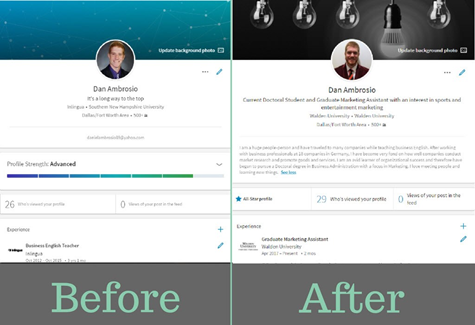
Above you will see a before and after picture on LinkedIn account that has been updated. This is not my account; however, it is a good example of how people can change their account for the better. There is a huge difference from the first to the second. He has changed his profile picture in the after to something more professional and added a background picture that relates to his job. He has changed his headline-making it more professional and personal. He has added his university and his location. As well as an in-depth summary. His views have gone up on his profile overall.

Though these differences may seem small they are very impactful. His after picture looks much more professional and welcoming than his first. Through the use of the tips that I have supplied you with today, I hope you can better your LinkedIn.

Until the next post!

References:

Verdonck, B. (2017, March). LinkedIn Profiles for Social Business Success [Video File]. Retrieved from https://www.lynda.com/LinkedIn-tutorials/Communicate-changes-your-LinkedIn-network/512777/581612-4.html?srchtrk=index%3a1%0alinktypeid%3a2%0aq%3alinkedin+profiles+for+social+business+success%0apage%3a1%0as%3arelevance%0asa%3atrue%0aproducttypeid%3a2

Top Digital Marketing Tools

There are a number of different types of digital marketing tools available to use. However, since there are so many it can become overwhelming to many people. Throughout this blog post, I will touch on some tips and tricks that can help you choose the best tools for your company. Hopefully, these strategies will help you manage your time and money effectively while investing in top digital marketing solutions.

Foundations of Digital Marketing

There are multiple different areas of digital marketing and depending on your organization’s goals, there may be certain areas you will need to rely on more (Alexander, 2019). Some platforms will require a payment, while others, like social media, are free to use. Since it does not require payments, social media is an “organic digital marketing purposes” (Alexander, 2019). As you are focused on gaining subscribers, however on some platforms you can boost your post gaining attractions. I have worked for companies who have done this, and it increased their customer flow.

However, there is a difference in paid posts and display ads. As a paid post is normally free, but you are paying to have it boosted. While display advertising is the paid banners and ads that pop up on the side of the screen on social media. There is a difference between the two, which will be discussed later on in the blog post.

The first step is how to select the right tools that will benefit your company. While there are several tools to choose from, I always recommend looking at track records. This is an important part as you can see how successful they have been for others prior to implementing them in your organizations. You don’t want to waste time or money on tools that are not effective and don’t have a track record that stretched back at least a couple of years. I recommend always using free trails, as it allows you to test the tool before commitment.


https://www.google.com/search?q=social+media&source=lnms&tbm=isch&sa=X&ved=0ahUKEwim-Jzj65LjAhWT3lQKHb6eAlsQ_AUIECgB&biw=659&bih=750#imgrc=4u64vvjm5s1FeM:

At my job, we have used free trails to ensure that the tools being offered will be effective in our line of work. In addition to free trails, look for scalable tools as well. This will help provide growth in your organization (Alexander, 2019). Multiple tools offer different tiered version, allowing you to simply upgrade the account when necessary.

Social Media Marketing

The first topic we are going to discuss is organic social media marketing. This is when you post on Facebook, Twitter, Instagram, or a different platform, and do not pay to promote these posts. As well, you do not pay for a display advertisement. These posts are used to increase awareness to your organization and in some case build a rapport (Alexander, 2019). It is amazing as some top platform using organic social media marketing are ones that would not always come to mind first (Alexandra, 2019).

Facebook, Instagram, Twitter, Snapchat, and Pinterest are all platforms that are good options when participating in organic social media marketing (Alexander, 2019).  However, some of them may be more beneficial to you, depending on the organization and marketing budget. One consideration that is important in relation to organic social media marketing is authenticity.

Organic social media marketing is not overall the best place to “advertise specific product or service unless you have a lot of contexts and have a significant rapport” (Alexander, 2019). In my job, we used social media organic posts to communicate and build relationships with potential new customers. As well as maintain customer relationships. This build’s and represent the authenticity of the company. One of the best ways to do this is to provide tips and solutions if the customer is having a problem as it helps build relationships.


https://www.google.com/search?q=social+media&source=lnms&tbm=isch&sa=X&ved=0ahUKEwim-Jzj65LjAhWT3lQKHb6eAlsQ_AUIECgB&biw=659&bih=750#imgrc=-vEBvM5Cb-9b4M:

Users on social media will scan post, therefore, you must put time and thought into the posts to ensure its value is return. Do not make it too much of a sales pitch, otherwise, you will not see the return on your investment.  Some companies choose to post on the 24 hours stories, which can be useful for big organizations; but once again make sure it worth the post. I recommend posting on the actual feed for smaller and medium businesses as more people will be able to see as there is no time restriction.

A good place to begin is posting on one or two social media sites about once a week. I have seen a few companies started this way and then they adjust the frequency of posts accordingly to their followers and customers. I also believe in setting goals to accomplish, as it will show your effectiveness. A few good goals are what outcomes are you looking, do you want to drive traffic to your website, are you trying to make direct sales, or are you building future sales and promotions?

In addition, you can track your ROI with your social media platform post, therefore tracking the success of them. This can be challenging; however, one is using a third-party tool when posting on social media. Some platforms allow you to post content across multiple accounts, saving time and money. Although it is important to be on social media, it is also important to be aware of the time and money being put in and getting out of the organic posts.


https://www.google.com/search?q=social+media&source=lnms&tbm=isch&sa=X&ved=0ahUKEwim-Jzj65LjAhWT3lQKHb6eAlsQ_AUIECgB&biw=659&bih=750#imgrc=ELIgyGtv7pG0hM:

There are more ways than just posting normally, organic social media posts, or advertisement displays; that appear in the sidebar or before a video. However, there is a third hybrid way, where you pay for your post to be promoted, reaching larger numbers. You even have the ability to target specific people depending on the platform your using for your company. Take your post that contains the most valuable information and give a little bit more promotions. Allowing you to gain followers without having to do this for every single organic post.

On Facebook all you have to do it click the boost button post, to promote an already created post. When clicking this it asks you a number of goal-oriented questions that fit your company, allowing Facebook to determine who will be the best fit to see the post (Alexander, 2019). You have the choice of adding a button that says Book Now or Send a message.

At my company, we have an interaction button that allows customers to talk to employees and ask their questions. At the very end, you have the option of your target audience. You can even narrow it down to gender, age, location, demographic, interest, and behaviors. Overall you just want to ensure you are reaching out to the correct potential customers. Once it is saved and boosted, the post will show up in the middle of someone’s feed rather than on the side. Just make sure your post is building awareness, creating a rapport, and build authenticity (Alexander, 2019).

Top Platforms

You can have a platform that automates your postings, combining your social media accounts on a single platform, allowing you to access it from one point rather than an individual. Hootsuite is the first option; it has been around for a few years and is one of the most popular platforms. Hootsuite has a few solutions and shows you on the left side which social media platforms they integrate with. As well you can schedule posts and monitor all interactions with the post from Hootsuite. They have a number of different networks you can use including, Twitter, Instagram, Facebook, and YouTube. However, it is not free, but they do have different plans with the lowest starting at $30 per month.

Before starting with Hootsuite Alexander and I both recommend having a social network prior to joining (Alexander, 2019). This the most effective when you are putting in too much time, and the workload of the different platforms is becoming too large for yourself. Overall the work has become overwhelming when making social media post.  You can begin with the 30-day trial that allows you to access all the tools on Hootsuite before making your final decision.

A close second to Hootsuite is Agorapulse. This site allows you to schedule post and it has an option to “evergreen content” (Alexander, 2019). Which essentially allows to you specify the content within your blog and website. Evergreen content is never outdated and is always relevant, Agorapulse gives the option to specify what this is on your social media (Alexander, 2019). This platform also allows you to manage the message, listen to the popular topic of customers, and reporting your return on investments.


https://www.google.com/search?q=hootsuite&source=lnms&tbm=isch&sa=X&ved=0ahUKEwi68eu77JLjAhXrwlQKHRSgCUEQ_AUIEigD&biw=659&bih=750#imgrc=o_oQvhoe5fJNqM:

Agorapulse allows you to do a 30-day free trial, similar to Hootsuite, but it does start at $40 a month. However, this may be the correct fit for your organization therefore worth the investment. However, if you do not want to spend money there is another option Buffer, which is free.

It does not have the same feature as the other two, but it does offer a free plan. Buffer does have other plans but those do require payment, with the next beginning $15 a month, therefore, you can upgrade when needed. On the free platform, you can have up to three sites and 10 schedule posts (Alexander, 2019).  As well they only integrate with Facebook, Twitter, Instagram, LinkedIn, and Google+ on the free plan (Alexander, 2019).

The other tool is SproutSocail, which is very popular. However, it is the most expensive, starting off at $100 per month. It is better for bigger organizations and offers a free trial. SproutSocial does have all the features the first two have. As well as customer relation management and the ability to manage some displayed marketing.

Digital Advertising:

There are a few different types of digital advertising that includes basic display ads, promoting links, video advertisement, and mobile ads. While looking at these we are also going to look at top tools that can be used to run effective online advertising campaigns (Alexander, 2019).

There are multiple networks and options that allow you to display your advertising. Some different ones include big daddy and Google Ad Manager. Google Ad Manager is the most popular and reaches the most people (Alexander, 2019).  This option is also free; while the search engine marketing is when you pay to have a to have the link at the top of searches (Alexander, 2019).

I recommend starting with Google as it is still the most popular. There is another tool when doing this which is called SEMrush. Alexander believes this is the best; as it provides more data, more value, but it is more expensive (Alexander, 2019).

Google Ad Manager can also be used in video advertisements. It is also used to publish by using a display of networks.  Another tools you can use is Oath and OpenX. These are both great options when displaying your ads, it really just comes down to your organization and budget.


https://www.google.com/search?q=google+ad&source=lnms&tbm=isch&sa=X&ved=0ahUKEwitpbDc7JLjAhVN4VQKHcnzDYgQ_AUIECgB&biw=659&bih=750#imgrc=jAuYJi7UBkw9tM:

For digital advertisements, it focuses on mobile devices. Therefore, Google Ad Manager is one of the best places to start (Alexander, 2019). You can use the same account if you have set on up for desktop advertising or on YouTube. However, there are other options including TextMagic which allows you to market with text messages. I have received these for a number of different companies offering coupons by text messages.

Content Design and Curation

There are several different design companies that you can use. Some include Adobe, Photoshop, InDesign, and Canva. Depending on your budget and your capability of using these sites may vary. However, lots use photoshop as it is user-friendly and free. While Canva is popular among marketers as it is easy to use. So, it really depends on your advertisement, company, and what you want of out it.

Content curation is a great option, the only thing is to make sure you give credit where credit is needed (Alexander, 2019). This where you can provide valuable information to customers, without creating it.  It builds trust, save money and time; but there are some tools that can help with this. A few different ones include Scoop, Feedly, and Pinterest.

Scoop is one of the most popular and allows you to find content, sav it and deliver it to your customer (Alexander, 2019). It takes from blogs and websites, while Feedly takes from blogs and popular RSS. On this one, you will be notified of new content and you can decide if you want to curate it or not. While on Pinterest you curate pictures and graphics, as they use images to gain a community.

Email Marketing

Depending on the size of your email list, it will determine the amount and type of tool you use for email marketing tools. The first step prior to purchasing a tool in determining the length of your list and the size of your budget. Ensuring that your platform integrates with the chosen tool and can allow customers to easily sign up for your companies email newsletter. People with a larger email list can actually have automation, that sends certain emails to different people throughout the buying process.

There are multiple different options for email, some examples include, HubSpot, Constant Contract, AWeber, and ActiveCampagin. All of these platforms have different values added to them and have a variety of processes. Therefore, you should do some research and choose the one that best fits your organization’s goals, budgets, and size.

Search Engine Optimization

Search engine optimization and digital marketing are similar because search engine optimization is one of the most important pulls marketing techniques.  There are free tools that help with search engine optimization such as Google Search. This can help you identify the competition and Google snippets of search results. The second one is Yoast SEO, which is recommended for people using Word-press. It is free but you can upgrade if you choose (Alexander, 2019). These are just a few examples and the nice thing is you can dig deep, finding a number of paid and free tools to use to optimize your search engine.

For paid tools, their multiple options. One option that offers different functions, and is popular is Moz Pro. It has been around for multiple years and has numerous tools. It checks links, ranks keywords, and look at effectiveness for campaigns (Alexander, 2019).  A standard account is $99 a month, but it offers several different features and pricing. Another good tool is SEMruch and SpyFu that allows you to look at your competition. Overall the most important part is evaluating what you want from this, how much you are willing to spend, and ensure you conduct research on your choice.

Affiliate Marketing

There are plenty of affiliate marketing networks and choosing one can be hard, here are some tips that may help:

  • Check the payment structure, some are a cost per click, while others have a cost per action
    • Cost per action is better
  •  You want to receive as much information as possible
  •  You want high-quality publishers, that market and expose your products and services properly
  •  Reputation is the most important

You want to ensure that these platforms are successful and protect your products, services, and company (Alexander, 2019).  Some great options are CJ Affiliate, Rakuten, and Clickbank. Once again, ensure you conduct your research to find out which one suits your company the best.

Conclusion

An example of a company that uses these tools is American Express. They have created a community and primarily use curation. They have an Open Forum website and allow authors and people with business knowledge to contribute to the discussion. Within this, they have rich content, popular search engines, all without paying contributors. They draw people in creating value to their content as it attracts an audience due to the content created.


https://www.google.com/search?q=american+express&source=lnms&tbm=isch&sa=X&ved=0ahUKEwihprv07JLjAhUQ7J8KHfw1DO0Q_AUIESgC&biw=659&bih=750#imgrc=IUKeMJbXrSqFjM:

While Moz Pro is a great tool when working with search engine optimization. As well, if your company is actively on WordPress, they should be using Yoast SEO it is free and easy to use. Overall, there are multiple tools that will help you with your digital marketing the most important one is to conduct your research and find the best fit for you.

Till next time!

References:

Alexander A. (2019, April). Marketing Tools: Digital Marketing [Video File]. Retrieved from https://www.lynda.com/Marketing-tutorials/Marketing-Tools-Digital-Marketing/753915-2.html?srchtrk=index%3a1%0alinktypeid%3a2%0aq%3amarketing+tools%3a+Digital+MArketing%0apage%3a1%0as%3arelevance%0asa%3atrue%0aproducttypeid%3a2

Content Marketing

Defining Content Marketing:

Content marketing is an important aspect of today’s business world. It is everywhere and has been creating a lot of noise, however there is confusion surrounding content marketing. A simple definition of content marketing is, “the process of creating valuable, relevant content to attract, acquire, and engage your audience” (Rothman, 2015). By implementing content marketing, you are allowing your company to be visible and enabling you to be heard. The qualifications for content marketing include, engaging and interacting with the customers, a story should also be told, including how does the content fix in your channels, and changing it when needed (Rothman, 2015). As well, a specific purpose, ensure you have goals prior, think about how the content should last, trying to make it last longer (Rothman, 2015).

When creating a marketing strategy for content marketing, always ensure it works for your business and industry. Though Content Marketing costs money, you are creating your own ideas in your business. Therefore, it’s different than participating in a Trade show, as you essentially “owning your own attention” (Rothman, 2015).  This can be explained because you create your content, you create own attention to your own brand, therefore, creating your own attention. Overall this strategy costs less money and has a longer life (Rothman, 2015).

Your content should be developed using thought leadership. This practice is used in content marketing, as it educates your customer and uses your best practices, encouraging them to buy your product. Overall your content marketing should include a mix of thought leadership, sales content, and education assets (Rothman, 2015). I have been told that thought leadership can entice and draw in customers, especially new buyers.  This does not push them, but ensure they have a reason to return back to your company (Rothman, 2015).

Foundations for Content Marketing

One important aspect of creating content marketing is assembling a successful team. This is the base foundation, as they will be creating your content marketing. First recognize your internal team, the managing editor will play an important role in content marketing and may require additional skills to fully prepare for the role (Rothman, 2015). An associate editor should also be placed on the team. This position creates content, edits, manages the projects, coordinates all team members, and manages your blog (Rothman, 2015). If your company is unable to financially support this, they should look at adding them in the future.


https://www.google.com/search?q=brainstorming+paper&tbm=isch&tbs=simg:CAQSkwEJF1_1_1UBtEx94ahwELEKjU2AQaAAwLELCMpwgaYgpgCAMSKIsIrBOpE7kTqxPYArYTuBPSAuIJnz3CPsY9nj3FPbI0vz28PvY_1lDQaMIvJalp7JgJx8Oe0t93G5DYdeVyt9PL41eWQegXeXjlsr_17KMdVhSHI1dTNoO0LXviAEDAsQjq7-CBoKCggIARIE2kOr6ww&sa=X&ved=0ahUKEwj_uYqmuIDjAhXNvp4KHcuABtwQwg4ILSgA&biw=1368&bih=721#imgrc=b5Pdt90kmRT3FM:

It can be hard to recruit an internal team. Rothman and I suggest looking at LinkedIn, former journalist, referrals, Twitter networks, and reaching out to content marketers from other companies (Rothman, 2015). You should also involve employee contributions, as you may need help from specific areas with detailed information. You can also look externally, for example, independent writing contractors that can help ensure you reach your goals.

Marketing strategies for content marketing will only work if the content organization is structured (Rothman, 2015). Therefore, the content should be neutral, allowing alignment with the organization. Encouraging everyone to openly speak and contribute ideas that will help it realign with the brand. Rothman recommends using the Content Service bureau Model (Rothman, 2015). Which creates a roadmap, support any requests from the team, the creation process for content, allowing a consistency (Rothman, 2015). This overall helps with the demand for content, searching through customer content, and knowing brand content (Rothman, 2015).

Overall your content team should include Content Committee, Content Service Bureau, your managing editor, associate editor, and then the writers (Rothman, 2015).  However, the team is just the beginning for your content marketing to be successful. You must be able to create a buyer’s persona, which helps them along with their journey (Rothman, 2015). It is important to highlight and address that your buyers may have different personas and journeys through purchasing your product. Therefore, your content must be “relevant and effective” (Rothman, 2015). There are different stages, therefore, the team must do their research on the buyers. Through incorporating your sales team, you will be able to find the important information that will ensure your looks at every stage of the buying process.

Consistency is important; therefore, you need to develop and incorporate your brand voice. It will allow you to be heard and stand out among the competition. Your voice should speak to your organization and incorporate its values.  You also need to create a brand voice tone, language, and style. The most important thing is that the voice of your content should stay consistent and relevant to each persona (Rothman, 2015).

I always believe in setting goals first; this also applies to content marketing. This goal should be measurable and define your success. Goals help keep you on track and ensure you have created proper content (Rothman, 2015). In making goals Rothman mentions meeting with Stakeholders, to obtain their views in relation to the goals (Rothman, 2015). As well I believe it important to check in with your self and ensure your content is on the right track. In addition, set qualitative and quantitative goals (Rothman, 2015).

Make sure all the information is down and then create your plan. Rothman suggests doing research and choosing a content technology platform that would help better your content (Rothman, 2015). These programs help you organize, communicate, and track your content project progress. Before choosing a content project management process, you should assess your situation at work, the content, who’s approval needed, workflow, and the free trials within the technology (Rothman, 2015). When choosing a platform, you must train your whole team this includes external and internal team members.

Creating the Content Plan

Brainstorming your ideas prior to writing your content is crucial, as it allows you to build content arcs. When writing you should always keep in mind the persona and who’s the buyer. A quick search engine is always a good starting point, so you can ensure your company will come up with keywords. As you want to beat your competitors, therefore, you also want to know what they are saying (Rothman,2015). Keeping up with them on social media is a good place to start. It’s also important to be knowledgeable about your company and what they want in the content (Rothman, 2015). Therefore, you should also include your stakeholder, fellow employee, and social media in this step, as it will help your brainstorming. Content arcs are created from brainstorming, and theme for “monthly, quarterly, bi-yearly, or yearly” (Rothman, 2015). 

After understanding the buyer’s journey, creating a content theme, and brainstorming ideas, you should “map your content to your sales funnel” (Rothman, 2015). Sales funnel helps you take a new buyer and transfer them into returning customers. Therefore, you must go through the appropriate steps of sales funnel to ensure this is the end result. In addition, Rothman and I both believe that you should have a content mix and must choose a content type that closely reflects your brand (Rothman, 2015). A blog is a good example, as they have been on a variety of topics, simple, and have valuable information.

Next is planning your editorial calendar, you should think about the content mix you’ve created. This editorial calendar ensures your whole company knows what’s being created and the timeline. The calendar should be accessible for the “marketing, sales, customer service, executives, and anybody who wants to know the content you’re creating” (Rothman, 2015). 

Creating the Content:

Writing content should be done in a repeatable process to help with its difficulty (Rothman, 2015). You should begin with finding an expert within the organization, then create an outline, afterward, you’re ready to write your draft (Rothman, 2015). I have always been taught that a thesis must be clear and concise, this applied to content marketing as well. It ensures the customer knows exactly what you are saying.  Rothman and I both recommend using bullet points so it’s easy for your customers to scan and retrieve information (Rothman, 2015).

Always edit your own drafts and have another review it as well, as I find they will identify more mistakes than you. After that write a second one and edit your final draft. Once that is complete you are able to send it to design (Rothman, 2015). Design helps the content become visual, which is crucial in todays market. In the content design it should have the brand color, the title clearly stated, and relatable images (Rothman, 2015). Once again edit, review the design to ensure the content it fully complete, then you are almost ready to go.

Sometimes creating content is difficult, therefore teams can curate content. Its less money and less time, content marketing can also be done through the “turkey dinner analogy” (Rothman, 2015). In which the team creates large pieces of information and dice into smaller portions, giving you more content (Rothman, 2015).

Promoting Content:

For promoting content, you must determine the Gating Strategy (Rothman, 2015). This is the process of placing a form in front of your content in order to gather lead contact information (Rothman, 2015). There are different options to gating which include gating all your content, none of your content, or gating on buying stages (Rothman, 2015). I prefer the second option as it eliminates the barrier and does not make people submit their information. It’s helpful in the early stages as it encourages education among buyers.

Prior to promoting the content, you need to outline the strategy you plan on using. Because once it is published it must be promoted through numerous channels. Rothman recommends sitting down with the stakeholder, outlining a promotional plan then promoting the content (Rothman, 2105).  By going through the steps of the strategy you ensure that you are maximizing your exposure.

The website is the most crucial aspect of promoting your content, and it can be in different areas on your site. For example, it can be on the homepage, on ads, or in the resource section. Wherever you choose, however, you should always promote on social media. Here are a few points you should remember for social media, don’t be afraid to pay to increase your presence, add valuable content, and always create strong calls to actions (Rothman, 2015). Most importantly always try to engage the audience.

https://www.google.com/search?q=using+social+media&tbm=isch&tbs=simg:CAQSkwEJyQPS5gHSsbAahwELEKjU2AQaAAwLELCMpwgaYgpgCAMSKOMMoBfsCbsD7QnuCYYB6wmfF9wIsz6PNd42sj6RNPM23zaSNOI2uicaMF8IWfIz_1-II96emhcGNKSpeG_1dYpW7Gw8XYz4kDQpR4PwKkl2YFqvis71xBZ-VPTiAEDAsQjq7-CBoKCggIARIEJeBj7ww&sa=X&ved=0ahUKEwj8p4P1uIDjAhWRu54KHWU8CYQQwg4ILSgA&biw=1368&bih=721&dpr=2#imgrc=Aunvk7pcpd7z-M:

Another good way is to promote through email and blogging. It helps send information to a new and current customer, keeping their attention. This information overall focuses on promoting your content (Rothman, 2015). Other ways include syndicating your content to third-party sites; leveraging influencer marketing (Rothman, 2015). This can help you create a relationship with an influencer that is in your industry.  The last option is the pay-per-click ad, however, this can be effective, but expensive.

Defining the measurement of your content: 

Prior to measuring your content, you must define your goals. This must be done before the content is created; therefore, it can be properly measured. This allows you to view how your content is performing (Rothman, 2015). After your goals, you must begin tracking the early stage metrics (Rothman, 2015). Through tracking, you can see where people are going, how often they download, read, and shares on social media (Rothman, 2015). These are important to monitor and track in relation to content marketing.

For tracking revenue impact, you must monitor “Mid- and Late-Stage metrics” (Rothman, 2015).  These metrics are used to prove revenue and show the investment of your business. It is pivotal you track these, as you can show others your growth within your industry and the business as a whole.

Conclusion:

When thinking of examples, the company that comes to my mind is called Buffer. They use guest blogging and publish content on highly visible sites. This capture customers attention bringing new and returning customers to their sites. They produce content that is high quality and shareable; and on one of their blogs, they write people who have influenced their customers. They have attracted numerous consumers through these blogs and now have 4 different ones. Overall, it is important for your company to create a foundation for content marketing. Creating a team of individuals that will contribute to content marketing, creates a strong basic foundation for your company. You should always create a plan, and brainstorm your ideas, this will produce your content. The end steps include promoting and measuring your content, as this will help ensure its success.

Until the next post!

References

Rothman, D. (May,2015). Content Marketing Foundations [Video File]. Retrieved from https://www.lynda.com/Marketing-Lead-Generation-tutorials/Tracking-mid-late-stage-metrics/369044/386380-4.html

Social Listening

Social Media Listening for Marketers:

Companies must be involved in all the conversations related to their businesses. These ongoing conversations around them, may help or hurt their businesses in the future (Waxman, 2017). Social listening has always been used in the companies I have worked with in the past. As it helps them stay up with trends and most importantly ahead of the competitors. Social listening can help businesses with customer relations, and in crisis situations (Waxman, 2017). Hopefully, this blog will encourage you to listen to the sounds that are impacting your business from a number of influencers.

Companies should always be listening to the chatter surrounding them, especially what is being posted online. The businesses that I have worked for, always listen to the customer’s voice and take advantage of opportunities to solve problems. Depending on the issue, it may be dealt with publicly on privately. These voices can come from numerous sources including, customers, influencers, employees, and competitors (Waxman, 2017).

The listening system can help businesses with monitoring their media, at a reduced cost and rather than hiring an external business (Waxman, 2017). In my experience, social media, especially Twitter, has been a great tool in allowing businesses to listen to their customers. Hashtags allow them to answer questions and identify trends within their business (Waxman, 2017). Google has been a great tool to allow businesses and consumers research trends and reviews. I personally frequently search on Google for reviews when trying something new, especially restaurants.

Google trends allow companies to narrow down their search as well (Waxman, 2017). It can allow them to look at condense information and implement strategies as needed (Waxman, 2019). However, I have learned that the business must also listen to their customers offline too. Communication on the front line has always been heavily implemented at places I have worked. I always recommend listening to customers, as it allows you to catch issues quickly and deal with them head-on. Otherwise, they may change your reputations for the worse.

Develop a strategic approach

Being innovative is pivotal for a business to succeed. Otherwise, your business may fall behind others. In my last job at a restaurant, we always had new dishes every 4 months. Attracting new customers and enticing regulars to come back for more. This can be a big challenge for marketers, as they want to remain on customers minds (Waxman, 2017). Waxman and I both agree that this is better in partners, as you can take suggestions that can be “positive, negative, or a combination” (Waxman, 2017). Partners are customers, you can listen to their ideas and insights to improve your marketing strategy.

By using social listening, companies can search relative hashtags that are connected to their business and become apart of the conversation (Waxman, 2017). However, in my experience companies should not come across too pushy and over the top. Waxman and I both agree they should “listen more than they speak” (Waxman, 2017). Through my experience, people tend to stay away from pushy salespeople, and instead go to places that listen to their needs and problems.  As well, in my experience, I found out that businesses can learn from not only complaints made directly about them, but complaints made about the industry overall.

 Though it is challenging to listen, I find that if you talk less and listen more people are more comfortable; therefore, more enticed to come back. This applies to social media and in person (Waxman, 2017). Waxman provides an important point of addressing the world of the customer (Waxman, 2017). Their motivation, days, challenges or goals, relationship (Waxman, 2017). This is an important thought to think about.

Businesses must understand what their customers “demographics, perceptions, behaviors” are, and who’s it coming from (Waxman, 2017). Companies should address the fact that different people require different needs and listen to them.  Overall people should be listening for “curiosity, not to just be nice” (Waxman, 2017). I find it encouraging when people ask questions and wait till the end to before adding their thoughts in. Waxman added an interesting point to repeat back to the customer to ensure we understand (Waxman, 2017). All of these tips for listening to curiosity will help increase your understanding of the customer (Waxman, 2017).

How to Start

As I stated I have used different online search tools to begin research on new places and activities. This is a popular thought as “93% of all online activities begin with a search” (Waxman, 2017).  Therefore, marketers must implement this change and use social listening to see what’s on their customer mind (Waxman, 2017). Most businesses I have been involved with use keywords to find out information on their customers. This is an example of Social listening being used in search histories.

By giving attention to online customers, a business can monitor specific questions they may have in relation to their industry. Twitter allows them to do this through hashtags, allowing businesses to “chime in or create a line of new ideas” (Waxman, 2017).  I have also learned that when conducting social monitoring a good tool to use is the autosuggestions that Google presents. I have used some of the topics I have found in the autosuggestions, to implement new ideas and create new opportunities. However, businesses must make sure they are listening to the right channel as they don’t want to miss any information (Waxman, 2017).

Social listening platforms and apps are out there and help businesses find information (Waxman, 2017). There are serval options just like apps and some must be purchased, others are free, and some are a combination (Waxman, 2017). Google and Bing are both free platforms that I use frequently. When I conduct searches in these engines, I always ensure I sign out and clear my search history. As I will get a fresh set of results that are more various, this is especially important for businesses. As they will find out information from people that do not have a relationship with their company (Waxman, 2017).

Waxman also brought up a site called DuckDuckgo, which does not track you and provides you with a wide range of searches (Waxman, 2017). Another method a business could implement is Google Alerts, which informs you when anything related to their business is searched. These are only a few of the free platforms used by businesses to incorporate social listening. Some others include using specific hashtags, keywords, or other information on social media. This allows you to see what people are saying about your business and industry (Waxman, 2017).

Waxman prefers a platform called Hootsuite which is available in paid and free accounts (Waxman, 2017). This platform allows the user to manage all their social media, “measure interaction, and schedule posts” (Waxman, 2017). In my current job, we have multiple social media platforms. Therefore, this is very beneficial to us as they can all be managed from one place and allows us to measure customer interaction. As Waxman stated this is a great chance for businesses to be involved in the conversation by listening to customers and identifying any issues (Waxman, 2017). Overall Waxman and I agree that social listening requires observation, communication, and proper judgment (Waxman, 2017).

 Social Listening in action

Always pay attention to the world around you, otherwise, you may be missing information about customers, competitors, and your industry (Waxman, 2017). By implementing social listening, it can allow your company to generate new ideas. You may have internal and external research in your company; but from my experience, social listening can help you gather more information. I have learned that social listening allows you to ask your customers questions but also allows you to learn how your competitors are operating.

Social Media allows you to track your competitors by providing a list of them. You will receive an alert when your competitor interacts in a conversation with their customers. Waxman recommends you use hashtags to further monitor your industry and gain a bigger scope (Waxman, 2017).

In my experience, social media has been a great tool to listen to and resolve customer problems (Waxman, 2017). In my past jobs, our social media networks have been closely monitored and watched for customer issues.  In general, by helping customers online, you typically are answering several customer questions. However, as I stated, in the beginning, it is pivotal for companies to know when to take the complaint offline and discuss it privately. Overall, social listening allows you to directly deal with customer complaints, showing others that you are a responsive and caring business, which is important (Waxman, 2017).

Social media can be a helpful tool, but we have also seen it when it creates a lot of damage. Customers have the ability now to post rants and ensure their voices are heard. Allowing things to look like a crisis, however, not everything is a crisis. It may be an issue and it’s important to know the difference. A crisis is when an issue explodes, and there is a long-term risk of financial and reputation damage to the business (Waxman, 2017). While an issue is a negative situation, and with growing intensity could harm your business (Waxman, 2017).

Social listening allows as management to see if it’s an issue or crisis, then takes steps to improve the situation. Giving the business an opportunity to quickly resolve conflicts, allowing them to minimize the damage. Waxman recommends reviewing your messages, mentions, and companies name daily on social media (Waxman, 2017).  While reviewing social media pay attention to the sentiment and how frequently your name is brought up (Waxman, 2017). If frequency increases, it is a red flag and could be a sign of an issue occurring (Waxman, 2017)

 Another idea to watch is industry hashtags, as they can give you some major issues that could impact your business (Waxman, 2017). Also, beware that new hashtags could appear, and this could be a sign of an issue arising. In my experience by monitor social media daily, it helps eliminate issues and ensure a crisis will not occur. By quick detection, it ensures an action plan is in place and the proper steps are taken.

Conclusions

Overall, social listening is pivotal to business, as it allows them to find out information on their competitor, but also how their customers are feeling. For example, the clothing company Zara is very committed to their Social Listening. The company closely monitors all their social media, especially Twitter very careful. The add comments and likes to Tweets that are positive. As well, helping customers who are dissatisfied with purchases, allowing an opportunity to change a negative experience into a positive one through Social Listening. By implementing Social Listening, Zara has been able to quickly meditate problems while encouraging people to shop at the brand.

When companies implement social listening, they are allowing themselves an opportunity to interact with customers. This should be implemented in the early stages of a marketing strategy, as it will help the business prosper and grow. It allows the company to monitor and handle issues while improving their customer service (Waxman, 2017).  Ensures that while practicing Social Listening, you are a curious listener and show that to the customer. This will help your business achieve goals and innovate into a leading competitor in your marketplace. 

Until the next post!

References:

Waxman, M. (2017, June). Learn Social Media Monitoring [Video File]. Retrieved from https://www.lynda.com/HootSuite-tutorials/Next-steps/546104/621995-4.html

Learning Marketing Copywriting

Marketing Copywrite

“Marketing is everywhere in our society” (Lurie,2014). It is done by using appealing campaigns to entice consumers into purchasing products from various companies. With the help of proper marketing techniques, businesses can increase their profits overall. Marketing Copywriting is a technique used to advertise and market a company’s product (Lurie, 2014).

Marketing Copywrite Overview

Do you know why the technique marketing copywriting is used in the marketing word? It is used to increase the purchases for people interested in the product (Lurie, 2014). It does not aim to convince those uninterested (Lurie, 2014). This is a very interesting concept, and when implemented properly will enable the company to sell more products (Lurie, 2014). Hopefully, after reading my blog, you will agree with Lurie and me that this type of communication to your customer is the best for your organization.

Marketing copywriting must be planned out, including a “call to action” (Lurie, 2014) from your customer, and include an “attention grabber” (Lurie, 2014). Without these pivotal actions in your marketing copywrite, the customer will lose interest, therefore not buying your product. This “creative visual” (Lurie, 2014), will appeal to your customers increasing their willingness to buy the product. However, there will need to be a balance between the creativity and call to action; without this balance you may lose the sale.

Marketing Copywrite can be presented in multiple different ways, some of my favorites are a brochure, direct marketing, posters, and the medium. A brochure, which can be left behind for others to view (Lurie, 2014); while direct marketing, must have value from the beginning until the end of communication (Lurie, 2014). Posters can also be useful as it is brief yet can be effective and provide plenty of information (Lurie, 2014). While the medium, requires a brief description and is concentrated on the message and “not the environment the audience receives it” (Lurie, 2014).  In my experience, I have found posters to be very useful. As they tend to catch the eye of multiple customers, enticing them to ask for additional information that may or may not be on the poster. This usually leads them to purchase the product that is presented on the poster.

Styles are important while using Marketing Copywrite, as you want to be able to appeal and sell to your consumer. Therefore, the advertisements must be made in the correct style, tone, and collateral. Otherwise, the customer may be influenced not to purchase from your company (Lurie, 2014). In my experience this is very important and contributes to making sales. The style and tone must appeal to the audience you are selling to; therefore, you must know your audience. For example, the Marketing Copyright will most likely be different when selling a hair product versus selling a exercise equipment. As they are different types of needs, therefore the tone, style, and collateral must be altered to fit their categories.

Writing the Copy

It is important to prepare your tools prior to writing out the Marketing Copywrite, as well as create a plan before writing (Lurie, 2014). This step will help you move on throughout the process of your writing but will change throughout the duration, which is natural (Lurie, 2014). Plans can differ from every person; however, it is pivotal that you include this stage.  

Ensure you always have your first few thoughts on paper, this tool will help you create your writing. To start your writing off successfully, Lurie and I both recommend conducting a “free writing period” (Lurie, 2014). This is when you place all your thoughts on to paper, even if the ideas do not fully relate to the product. Lurie and I both agree this will give a sense of direction and help your Copywrite flourish into a successful advertisement (Lurie, 2014). After you have completed this period, you can officially start your first draft.

While writing your drafts, ensure that there are no distractions around you as you may lose your thoughts (Lurie, 2014). I always ensure my phone is on silent and my door is closed to limit the chances of a distraction. As you begin, your first draft can be produced in your own order preference. This can be a vast number of options including writing the middle first, the end, and then the beginning. I usually follow this structure as I find it works best for me and my writing. Yet, it is up to the writer how they want to begin, instead of following another’s writing procedures (Lurie, 2014). Ensure you find the process that works for you, as this is individual rather than a group effort (Lurie, 2014).

These general rules can help your Marketing Copywrite and help sell the products in the ads (Lurie, 2014). The first few are always “address the reader, the customer is not an algorithm, sarcasm will not work, include a tell me why, and be direct” (Lurie, 2014). Through including these rules into your Copywrite, you will transform the buyers needs into want; influencing them to purchase from your company rather than a competitor (Lurie, 2014).

After the draft is complete, it is time to edit the document. Lurie and I agree that you should have another proofread your work, as they will catch mistakes that you may not (Lurie, 2014). As well prior to proofreading your draft, you should ensure that you are using the least amount of words as possible (Lurie, 2014). I always get at least two other people to proofread my work, as they catch more mistakes than myself. As well, I read over my own work a few times at different points in the day.

However, all this work will be for nothing if the Copywrite does not entice the customer enough to buy (Lurie, 2014). Therefore, you must be able sell the page to the customer (Lurie, 2014). This can be done through numerous techniques; including a fun summary, enticing the customer to ask questions, or providing them a clear and concise platform of information (Lurie, 2014). These are important techniques and enhance you Marketing Copyright.  In my experience, it can make the difference between the customer buying your product or the competitors.

Print and online have a very different structure. Each one has its own “requirements and advantages” (Lurie, 2014). For example, context, imagery, and permeance are very important factors while printing Marketing Copywrite campaigns (Lurie, 2014). While online advantages include being “editable, testable, there are multiple channels” (Lurie, 2014). However, you must include some visual criteria to ensure that the reader will continue on (Lurie, 2014).

Rewriting

When looking over others work never rewrite it, instead give suggestions and edit their work, this strategy also saves your self-time (Lurie, 2014).  Your main job is to “improve without restructuring” (Lurie, 2014). Ensure you understand their tone throughout the persons copy, as this will help your editing skills (Lurie, 2014). I never rush when looking at a colleague’s work, as I want to provide useful feedback that will enhance their writing.

Different skills and challenges are posed when editing a webpage, a product description, or for social media. A webpage must be edited to include “readability, brevity… while implementing a fun text” (Lurie, 2014) to maintain the reader’s attention. This is important; otherwise the reader may lose interest switching to a different web page. 

While the product description “may make or break a company’s performance” (Lurie, 2014). The information provided should persuade by using less text, but not leaving them confused (Lurie, 2014). This can be complicated to achieve; therefore, you should take additional time to ensure it’s clear and concise. While social media copywriting can offend people and can spread fast (Lurie, 2014). Therefore, copywriters must be aware of what they are putting on social media and how it can be perceived. However, through social media copywriting you have the possibility to make edits live (Lurie, 2014). This is a nice feature as information on social media is viewed by a larger span of people increasing the chances of offending someone. In my experience, you should have multiple people check your work prior to posting it on social media.

Conclusion

Marketing Copywriting is all about influencing your customers to buy products. Ensuring their needs becomes a want and enticing them to buy from your company rather than a competitor (Lurie, 2014). However, to have proper Marketing Copywrite, ensure you have a plan prior and a call to action included (Lurie, 2014), as this will increase your sales. An example of this would be Moosejaw’s advertisement when they were selling the Hedgehog by The North Face company. In this email, it included an attention grabber which was a picture of the product. Followed by “15% less adorable than an actual hedgehog but 60% more durable and now 25% off” (Kolowich, 2019, para.23). The add includes a button that directs you to the website labelled as “GET IT” (Kolowich, 2019, para.23), which is the call to action. The add incorporates humor, yet still providing clear and concise information to the customer. All of these techniques help entice the customer to buy the product.

Remember to create a plan and have limited interruptions while writing your first draft, therefore retaining your thoughts (Lurie, 2104). Always edit and have someone proofread your work as you may miss mistakes (Lurie, 2014). Otherwise, they may ask you to proofread their work as well. Be aware that you are editing their work and not rewriting (Lurie, 2014). A marketing copywriter has its advantages, and it can benefit your business.

Until the next post!

Brittany Maw

References:

Lurie, I. (2014, May). Learning to Write Marketing Copy [Video File]. Retrieved from  https://www.lynda.com/Business-Online-Marketing-tutorials/Writing-Marketing-Copy/149250-2.html

Kolowich, L. (2019). 14 Copywriting Examples From Business With Incredible Copywriters. Retrieved from https://blog.hubspot.com/marketing/copywriting-examples